-
January WACKER’s new production plants for specialty silicones went on stream in Tsukuba, Japan, and in Jincheon, South Korea. This makes it possible to meet even better the growing demand for specialty silicones for the automotive sector, especially in relation to heat-sink compounds for electromobility applications, and for the construction industry. The new plants further strengthen WACKER’s position in the Japanese and other Asian markets.
-
February For the second year in a row, WACKER achieved a top score of A in the Climate category of the CDP’s annual sustainability ratings. CDP is a non-profit organization that evaluates the transparency and performance of organizations in the categories of Climate, Water and Forests.
-
March WACKER’s Holla site in Norway began replacing fossil coal with biocarbon as part of its silicon production process. The process of reducing quartz to metallurgical-grade silicon produces CO2 emissions. But by using biocarbon, WACKER avoids fossil CO2 emissions, thereby moving a considerable step closer to being able to produce “green” silicon.
-
March WACKER presented numerous product innovations at the European Coatings Show (ECS) in Nuremberg. Over 300 square meters, the company demonstrated its expertise as a leading manufacturer of specialty chemicals. Areas of focus included alpha-silane crosslinking binders for sealants and (assembly) adhesives as well as sustainable solutions for the building-materials sector.
-
March Safety is not an option, but a pre-condition for everything we do at WACKER and the common denominator that unites us all. Rules of conduct and principles that apply across the Group underline this requirement as part of a “for our safety” initiative and further strengthen our corporate safety culture.
-
May WACKER provides customers with comparable data on the sustainability of its products. This information is based on “cradle-to-gate” production and emission data for everything WACKER produces. Dedicated software uses this data to calculate the specific and comparable carbon footprint for each product. Emissions are calculated with high data quality on the basis of actual material consumption rates.
-
May WACKER continues to expand its position in the world’s largest chemical market: additional production lines for silicone fluids, silicone emulsions and elastomer gels went on stream at its Zhangjiagang site. What is more, to strengthen its specialty business, WACKER opened a new technology center in Jining in partnership with SICO Performance Material.
-
May Every year since 2006, WACKER has honored excellent achievements in Research and Development with the Alexander Wacker Innovation Award. In 2025, this internal award was presented in two categories for the first time. The “Silicon eye,” which uses infrared cameras and artificial intelligence to produce a live image from a silicon furnace for the first time, was honored in the Scientific Excellence category. The use of a digital twin to depict the virtual commissioning of the new semiconductor-grade silicon cleaning line was honored in the Business Success category.
-
June Lutz Greb, professor at Heidelberg University’s Institute of Inorganic Chemistry, was presented with the WACKER Silicone Award. Since 1987, this award has been presented to outstanding researchers in the field of silicone-based and silicon-containing chemistry every two years. Internationally speaking, Greb’s research in the field of complex chemistry and molecular catalysis is groundbreaking.
-
July WACKER has combined and strengthened its biotech research activities. 1,500 square meters of laboratory and pilot plant space and 700 square meters of office space have therefore been added at the Corporate R&D site in Munich. Research there focuses on manufacturing processes for biopharmaceuticals and on ingredients for food and dietary supplements.
-
July WACKER commissioned a new production line for high-purity semiconductor-grade polysilicon at its Burghausen site, further strengthening its position as a global quality and technology leader. Ultrapure polycrystalline silicon is the purest man-made material and the key raw material for the next generation of computer chips. Worth over €300 million, the new production facility represents the Group’s largest single investment in the last ten years.
-
September More than 20,000 visitors took the opportunity to look behind the scenes at WACKER’s two largest chemical sites in Germany: Burghausen and Nünchritz. Local residents, visitors and employees along with their families were able to gain inspiring first-hand insights into the diverse product range and operational processes of a leading chemical company.
-
SeptemberHalf a century ago, WACKER established its first Central America sales office in Mexico City. Today, the Mexican subsidiary is the number one for polymer binders and silicones in Mexico and the region.
-
October Silicones from WACKER drive the world forward. Whether energy transition, e-mobility, digitalization or sustainability – WACKER has the right solutions for these megatrends. Visitors to WACKER’s booth at K 2025, the world’s largest plastics trade fair, in Düsseldorf, were able to see this for themselves.
-
NovemberWACKER launched a growth factor that enables the growth of muscle, fat and connective tissue cells in culture media – the basis for the production of sustainable, cultivated meat. “FGF-2 Food” was developed for use in the production of cultivated meat. By cultivating animal cells, produced in a controlled environment, it is a sustainable and humane alternative to conventional meat production.
-
December The WACKER Relief Fund was founded in 2005 in response to the devastating tsunami in Asia. A great deal of good has been done since then. This is based on numerous donations from WACKER employees, which are then matched by the company. In line with the motto “helping people to help themselves,” the fund mainly focuses on supporting educational projects, such as the construction and running of schools in regions hit by natural disasters.

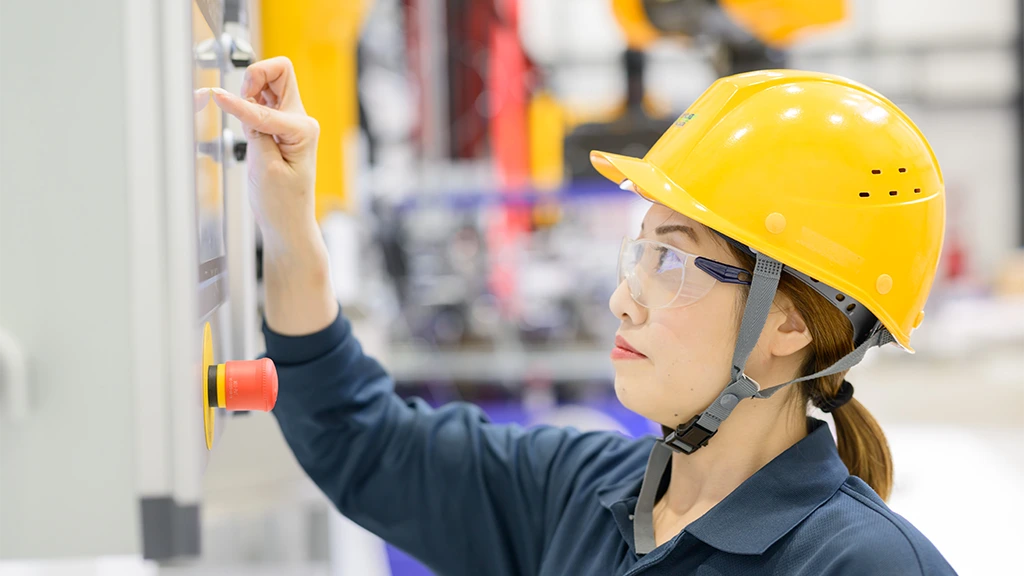 January WACKER’s new production plants for specialty silicones went on stream in Tsukuba, Japan, and in Jincheon, South Korea. This makes it possible to meet even better the growing demand for specialty silicones for the automotive sector, especially in relation to heat-sink compounds for electromobility applications, and for the construction industry. The new plants further strengthen WACKER’s position in the Japanese and other Asian markets.
 February For the second year in a row, WACKER achieved a top score of A in the Climate category of the CDP’s annual sustainability ratings. CDP is a non-profit organization that evaluates the transparency and performance of organizations in the categories of Climate, Water and Forests.
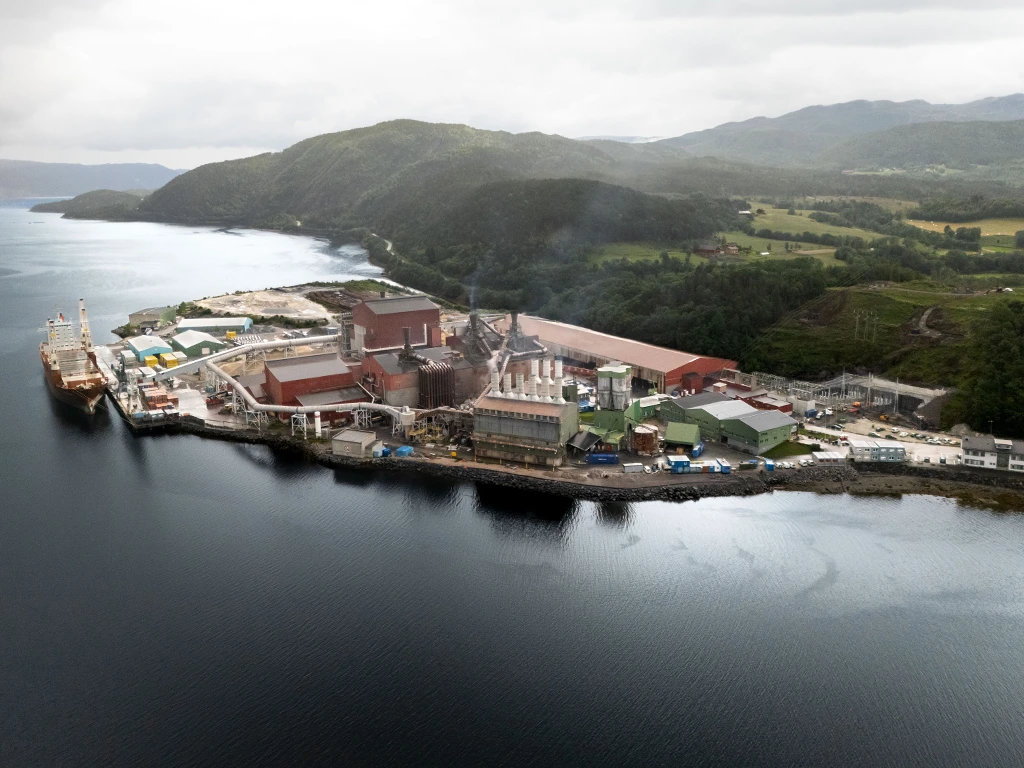 March WACKER’s Holla site in Norway began replacing fossil coal with biocarbon as part of its silicon production process. The process of reducing quartz to metallurgical-grade silicon produces CO2 emissions. But by using biocarbon, WACKER avoids fossil CO2 emissions, thereby moving a considerable step closer to being able to produce “green” silicon.
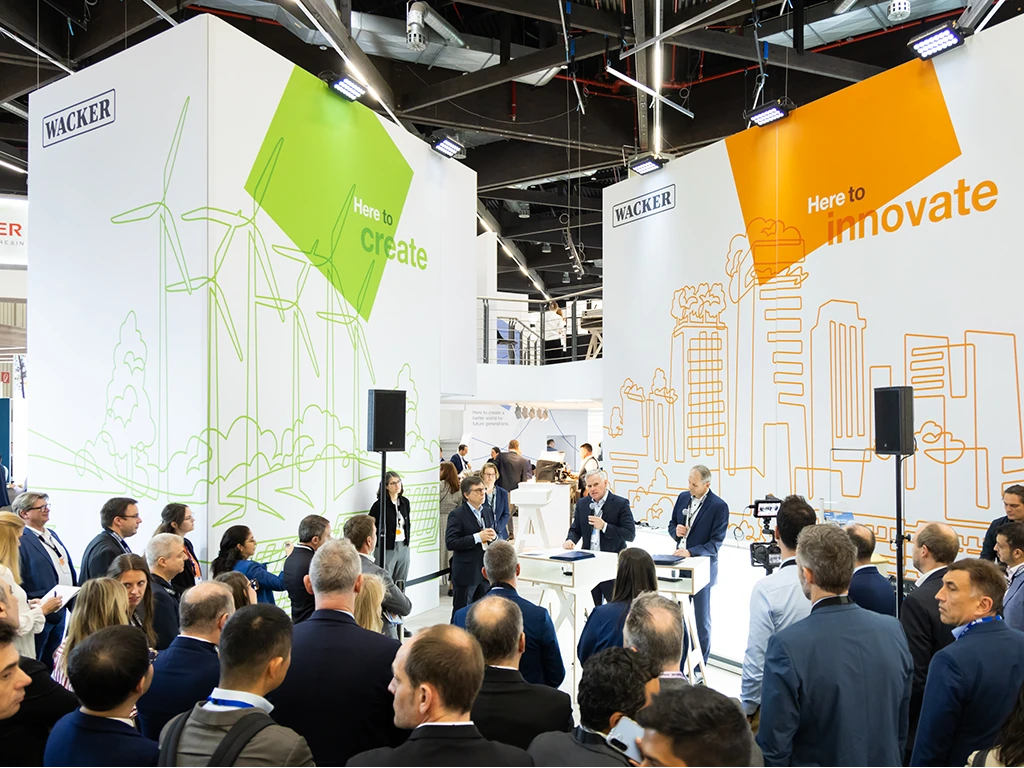 March WACKER presented numerous product innovations at the European Coatings Show (ECS) in Nuremberg. Over 300 square meters, the company demonstrated its expertise as a leading manufacturer of specialty chemicals. Areas of focus included alpha-silane crosslinking binders for sealants and (assembly) adhesives as well as sustainable solutions for the building-materials sector.
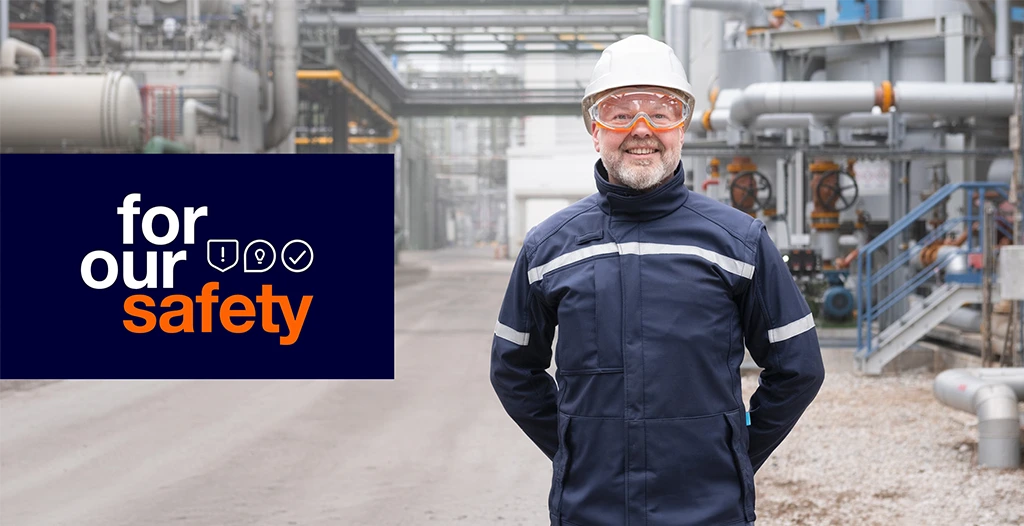 March Safety is not an option, but a pre-condition for everything we do at WACKER and the common denominator that unites us all. Rules of conduct and principles that apply across the Group underline this requirement as part of a “for our safety” initiative and further strengthen our corporate safety culture.
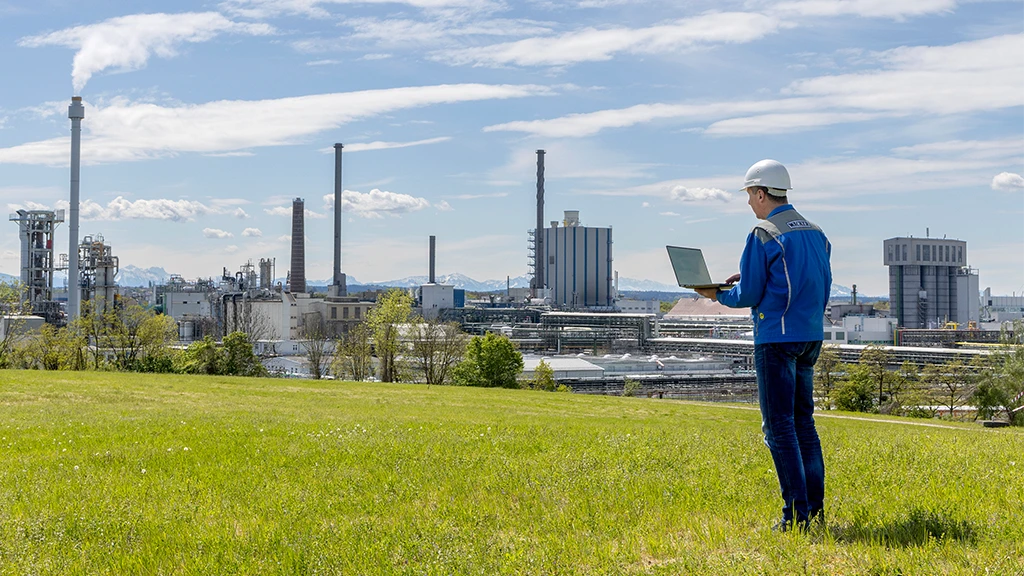 May WACKER provides customers with comparable data on the sustainability of its products. This information is based on “cradle-to-gate” production and emission data for everything WACKER produces. Dedicated software uses this data to calculate the specific and comparable carbon footprint for each product. Emissions are calculated with high data quality on the basis of actual material consumption rates.
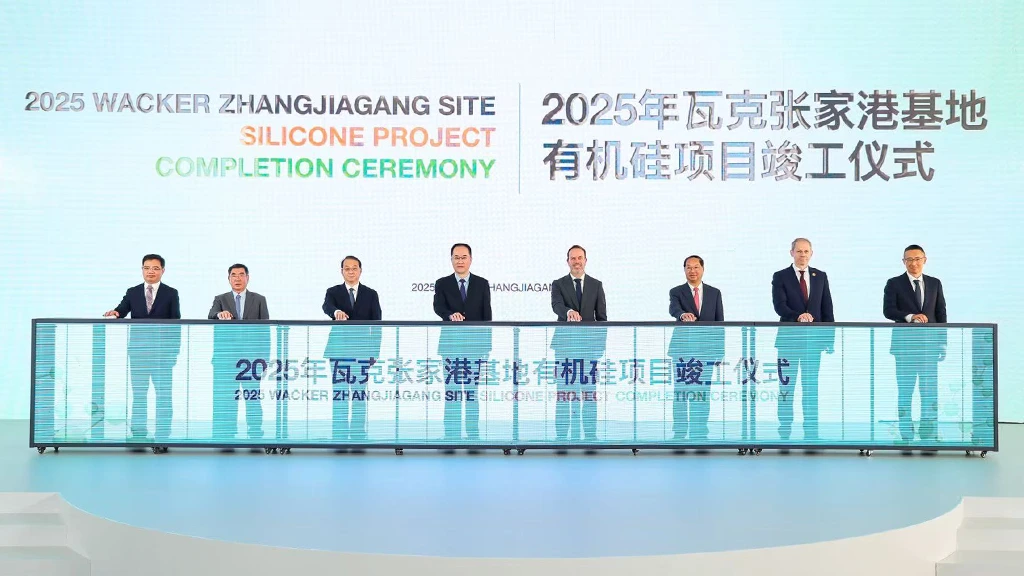 May WACKER continues to expand its position in the world’s largest chemical market: additional production lines for silicone fluids, silicone emulsions and elastomer gels went on stream at its Zhangjiagang site. What is more, to strengthen its specialty business, WACKER opened a new technology center in Jining in partnership with SICO Performance Material.
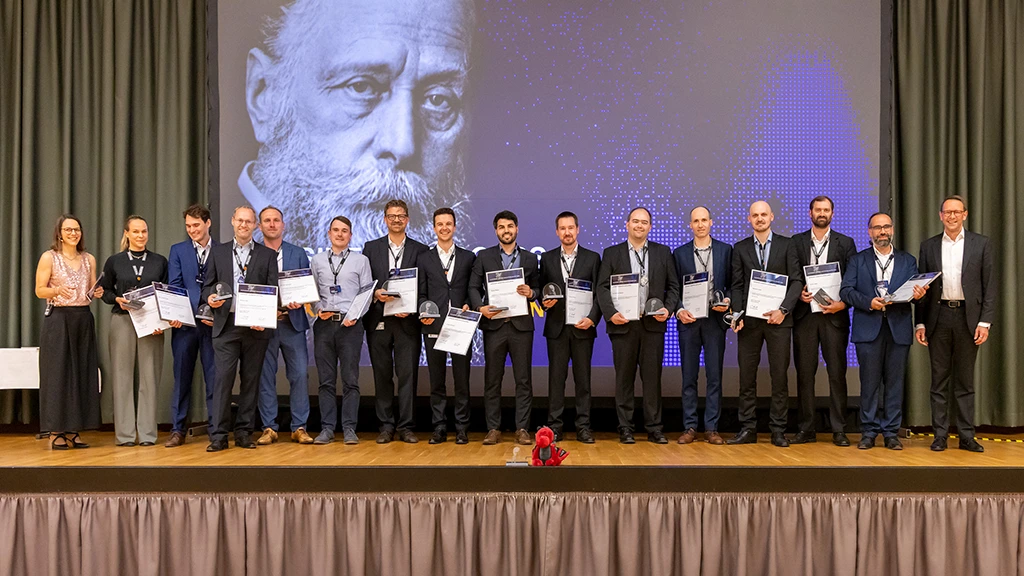 May Every year since 2006, WACKER has honored excellent achievements in Research and Development with the Alexander Wacker Innovation Award. In 2025, this internal award was presented in two categories for the first time. The “Silicon eye,” which uses infrared cameras and artificial intelligence to produce a live image from a silicon furnace for the first time, was honored in the Scientific Excellence category. The use of a digital twin to depict the virtual commissioning of the new semiconductor-grade silicon cleaning line was honored in the Business Success category.
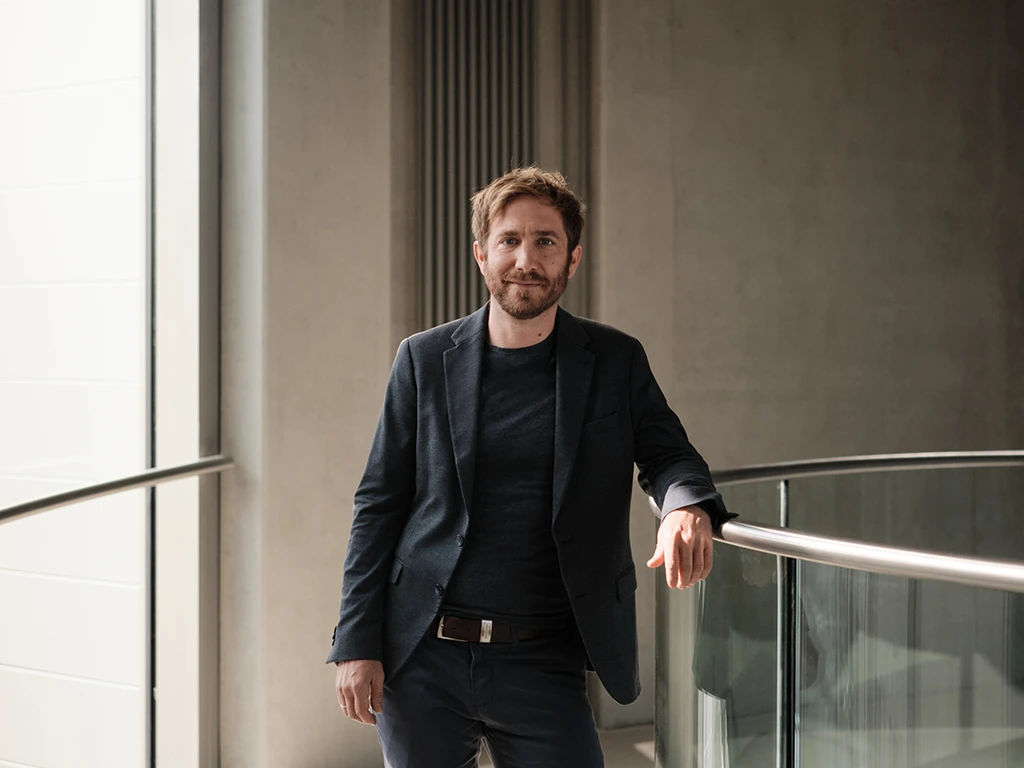 June Lutz Greb, professor at Heidelberg University’s Institute of Inorganic Chemistry, was presented with the WACKER Silicone Award. Since 1987, this award has been presented to outstanding researchers in the field of silicone-based and silicon-containing chemistry every two years. Internationally speaking, Greb’s research in the field of complex chemistry and molecular catalysis is groundbreaking.
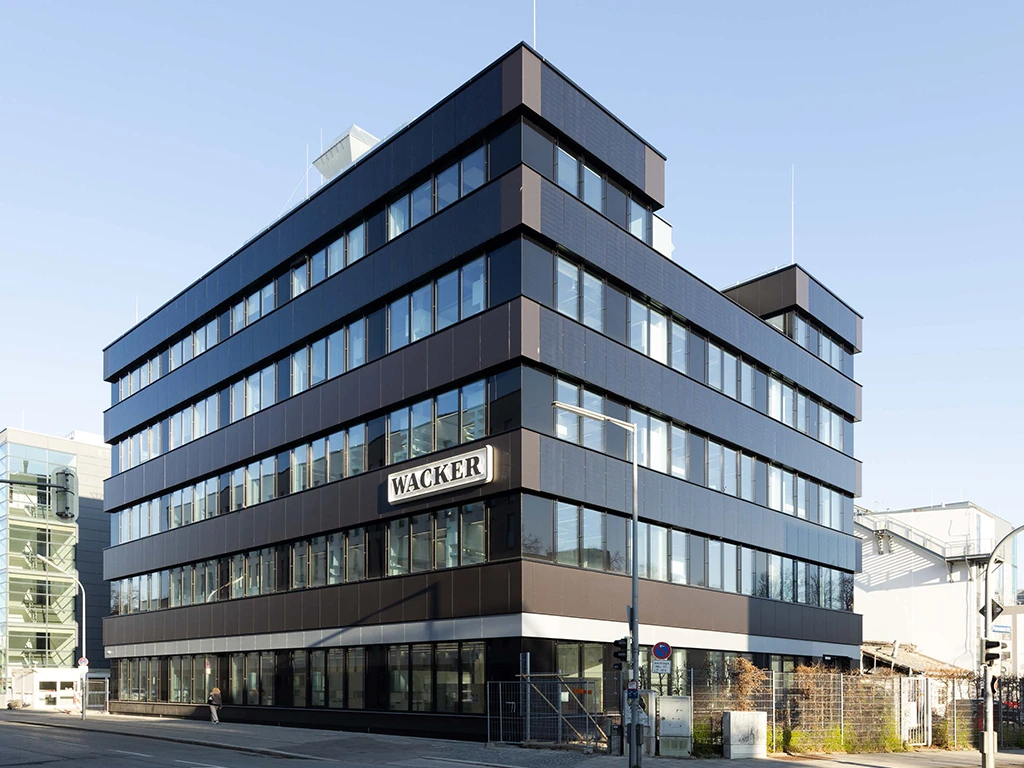 July WACKER has combined and strengthened its biotech research activities. 1,500 square meters of laboratory and pilot plant space and 700 square meters of office space have therefore been added at the Corporate R&D site in Munich. Research there focuses on manufacturing processes for biopharmaceuticals and on ingredients for food and dietary supplements.
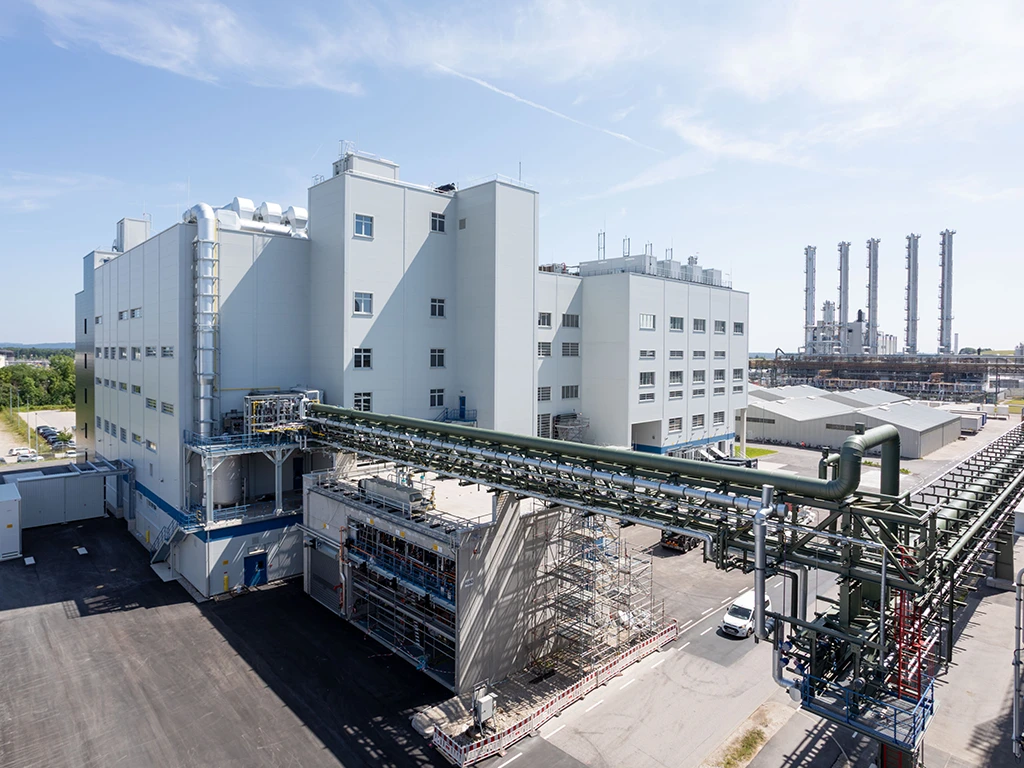 July WACKER commissioned a new production line for high-purity semiconductor-grade polysilicon at its Burghausen site, further strengthening its position as a global quality and technology leader. Ultrapure polycrystalline silicon is the purest man-made material and the key raw material for the next generation of computer chips. Worth over €300 million, the new production facility represents the Group’s largest single investment in the last ten years.
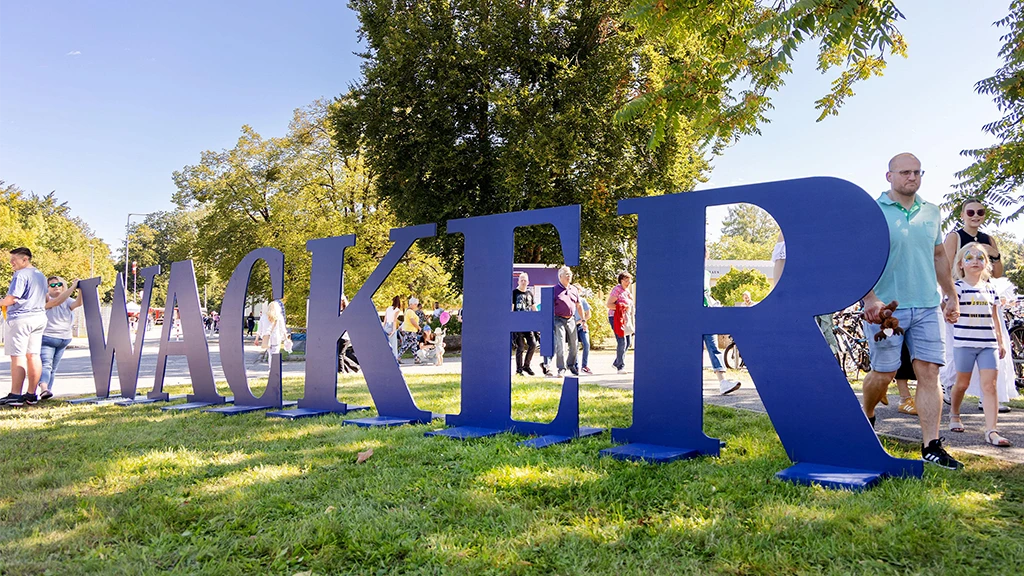 September More than 20,000 visitors took the opportunity to look behind the scenes at WACKER’s two largest chemical sites in Germany: Burghausen and Nünchritz. Local residents, visitors and employees along with their families were able to gain inspiring first-hand insights into the diverse product range and operational processes of a leading chemical company.
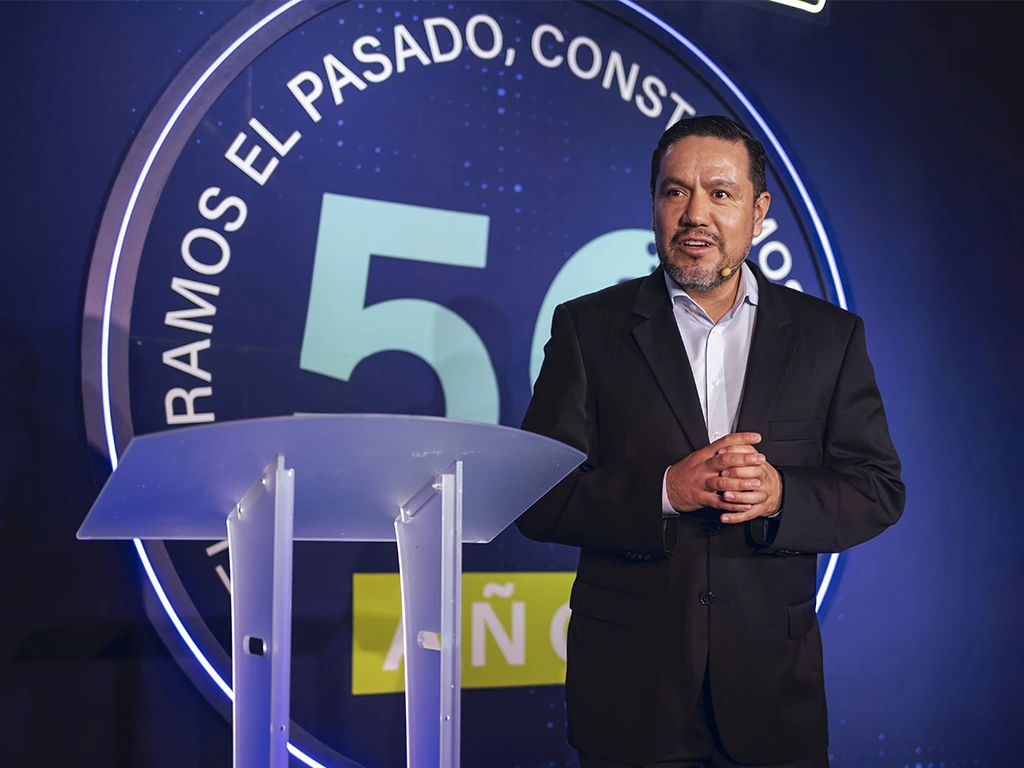 SeptemberHalf a century ago, WACKER established its first Central America sales office in Mexico City. Today, the Mexican subsidiary is the number one for polymer binders and silicones in Mexico and the region.
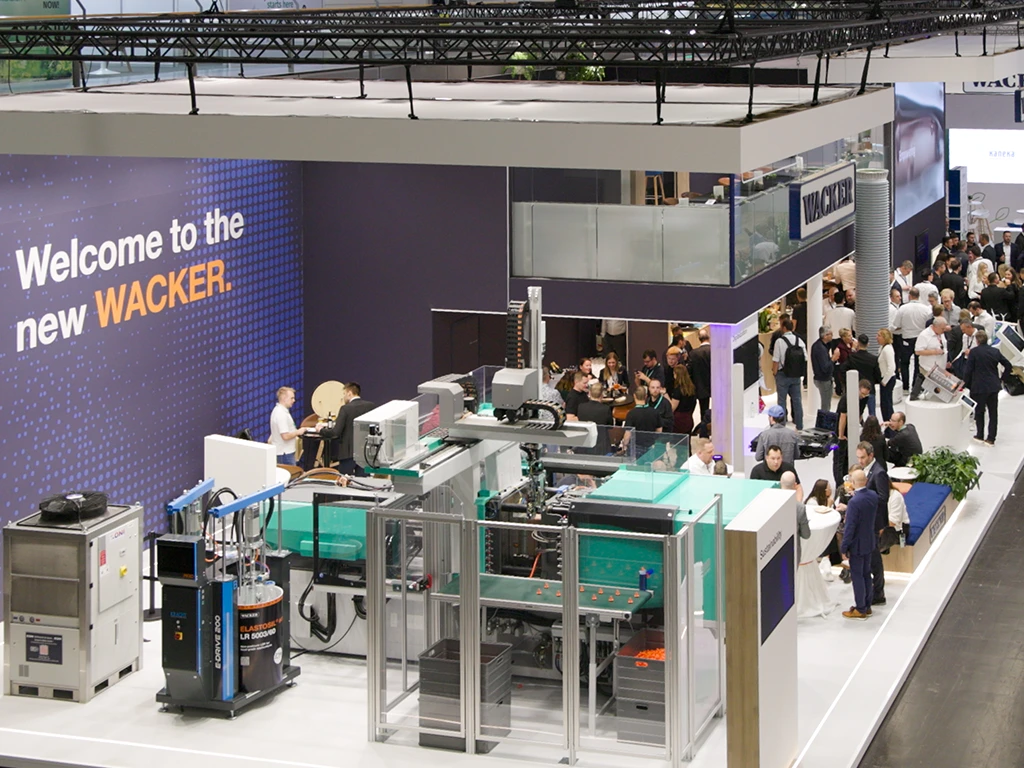 October Silicones from WACKER drive the world forward. Whether energy transition, e-mobility, digitalization or sustainability – WACKER has the right solutions for these megatrends. Visitors to WACKER’s booth at K 2025, the world’s largest plastics trade fair, in Düsseldorf, were able to see this for themselves.
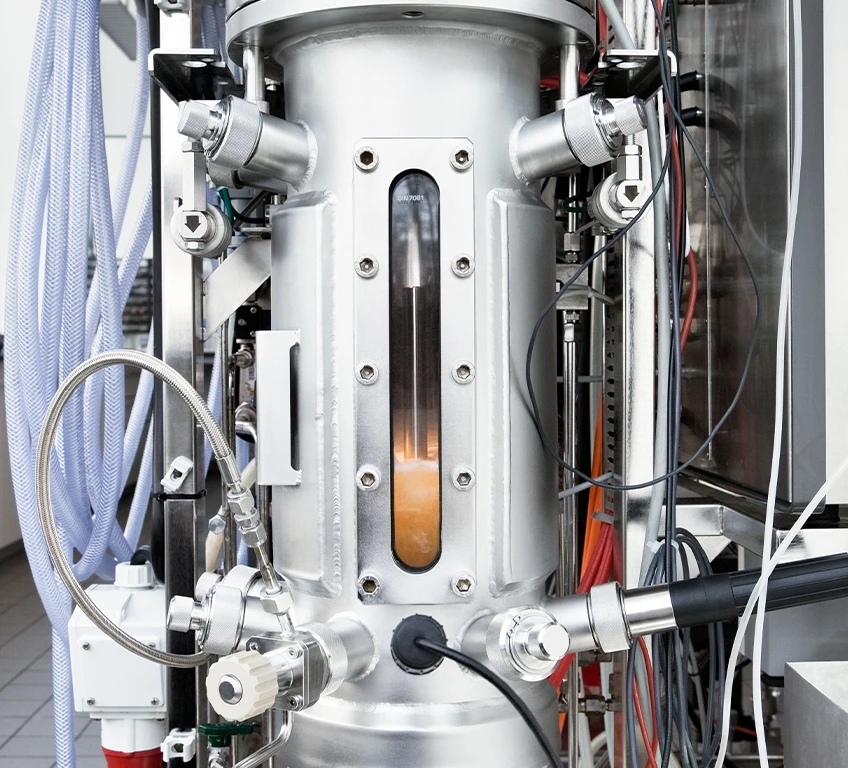 NovemberWACKER launched a growth factor that enables the growth of muscle, fat and connective tissue cells in culture media – the basis for the production of sustainable, cultivated meat. “FGF-2 Food” was developed for use in the production of cultivated meat. By cultivating animal cells, produced in a controlled environment, it is a sustainable and humane alternative to conventional meat production.
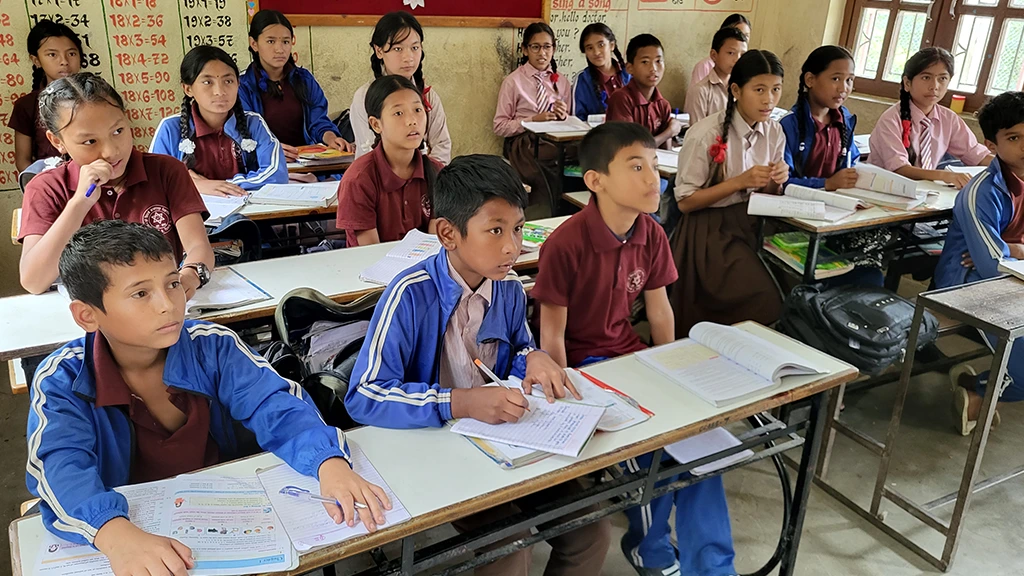 December The WACKER Relief Fund was founded in 2005 in response to the devastating tsunami in Asia. A great deal of good has been done since then. This is based on numerous donations from WACKER employees, which are then matched by the company. In line with the motto “helping people to help themselves,” the fund mainly focuses on supporting educational projects, such as the construction and running of schools in regions hit by natural disasters.
